
India isn’t just a land of vibrant cultures and ancient history—it’s also a paradise for adventure lovers. Over the last decade, the country has seen a steady surge in outdoor sports, with rock climbing in India emerging as one of the fastest-growing passions among thrill seekers. From seasoned climbers to curious beginners, more travelers are now stepping beyond traditional tourism to experience the raw excitement of natural rock formations and rugged landscapes.
What makes India truly special is its incredible diversity of climbing terrains. Whether it’s the world-famous granite boulders of Hampi, the volcanic basalt cliffs of Maharashtra, or the towering Himalayan faces in Himachal and Uttarakhand, every region offers something unique. These climbing spots in India draw adventurers from around the world, each seeking challenge, beauty, and adrenaline in some of the most breathtaking outdoor locations.
As adventure travel in India continues to boom, these destinations stand out as the perfect playground for anyone ready to test their limits—one climb at a time.
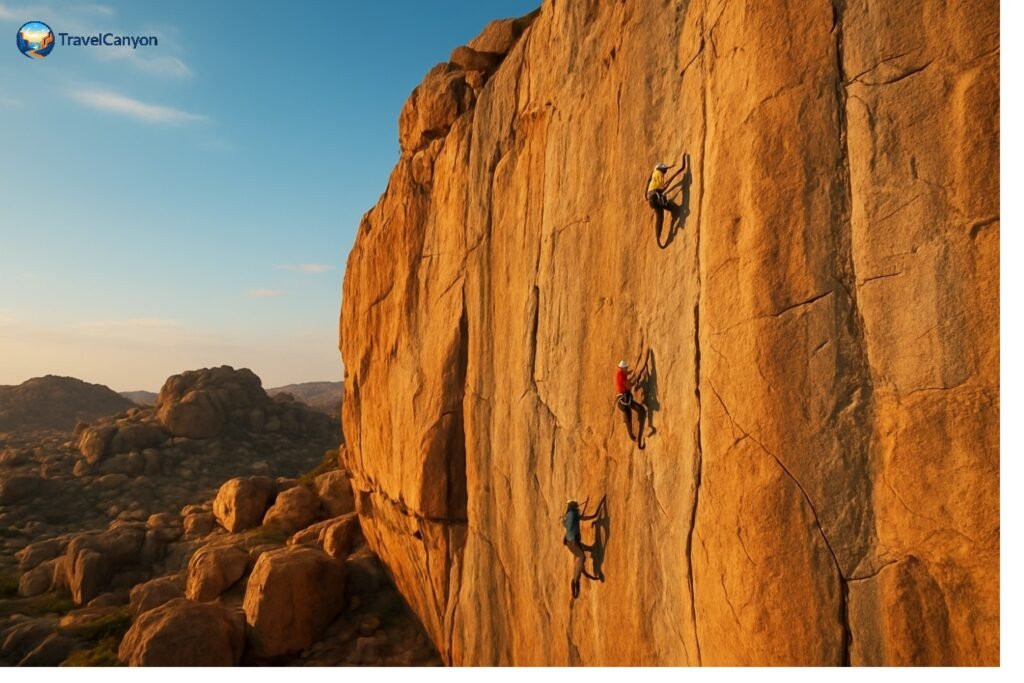
Why India Is a Paradise for Rock Climbers
India has quickly climbed its way onto the global adventure map, and for good reason. With its breathtaking landscapes, fast-growing climbing culture, and unmatched affordability, the country offers an irresistible blend of challenge and charm for climbers of all levels. Whether you’re chasing exhilarating ascents or planning a beginner-friendly adventure, rock climbing in India delivers a world-class experience without the world-class price tag.
Diverse Terrains for Every Level
One of the biggest reasons climbers love India is its astonishing diversity of natural rock formations.
From north to south, the terrain shifts dramatically:
- Himalayan Mountains: Ideal for advanced and technical climbers, offering steep rock faces, alpine routes, and high-altitude challenges.
- Granite Boulders: Places like Hampi and Badami are boulderers’ playgrounds, with hundreds of problems spread across massive ancient formations.
- Volcanic Basalt Formations: Maharashtra’s Sahyadri range provides unique cracks, columns, and vertical walls unlike anywhere else in Asia.
This mix of geological wonders ensures that every kind of climber—beginner, intermediate, or expert—finds a perfect match.
Affordable & Accessible Adventure Travel in India
Adventure travel in India is not just thrilling—it’s surprisingly budget-friendly. Many of the best climbing destinations offer:
- Affordable hostels, homestays, and campsites
- Experienced local guides and certified trainers
- Public transport and easy road access to climbing hubs
Whether you’re backpacking or planning a longer climbing expedition, India makes it easy to explore top-notch climbing spots without draining your wallet.
Growing Climbing Community & Training Centers
India’s climbing community is expanding fast, with passionate groups and professionals actively building a strong ecosystem. Across major cities and adventure hubs, you’ll find:
- Local climbing clubs and weekend meetups
- National and international climbing events and competitions
- Professional training centers offering courses and certifications
This thriving community not only supports new climbers but also fuels India’s rising reputation in global adventure sports.
| Point | Description | Examples / Highlights |
|---|---|---|
| Diverse Terrains | India offers varied geological formations suitable for all climbing levels. | Himalayan rock faces, Hampi granite boulders, Maharashtra basalt cliffs |
| Affordable & Accessible | Budget-friendly adventure travel with easy access, local guides, and economical stays. | Hostels, homestays, public transport, affordable gear rentals |
| Growing Climbing Community | Active climbing groups, events, gyms, and certified training centers. | Local clubs, competitions, climbing festivals, certification programs |
Best Rock Climbing Destinations in India
India is home to some of the most diverse and visually stunning climbing locations in Asia. From boulder-rich landscapes to towering Himalayan cliffs, these climbing spots in India offer unforgettable adventures for every kind of thrill seeker.
Hampi, Karnataka – India’s Bouldering Capital
Set along the ancient ruins of the Vijayanagara Empire, Hampi is nothing short of a dream for climbers. Its massive orange-hued granite boulders are spread across miles, creating one of the world’s most iconic natural playgrounds for bouldering enthusiasts. Climbers from around the globe travel here not just for the routes, but for the raw beauty, backpacker vibe, and welcoming climbing community.
Highlights
- Best for: Bouldering
- Terrain: Giant granite boulders shaped over millions of years
- Ideal for: Beginners, intermediate climbers, and advanced boulderers
| Feature | Details |
|---|---|
| Climbing Style | Bouldering, some sport routes |
| Rock Type | High-quality granite |
| Difficulty Range | V0 to V12+ |
| Best Season | October to February |
| Popular Zones | Temple area, Riverside, Vittala region, Govina Keri |
| Who It’s Best For | Solo travelers, backpackers, beginners & pro boulderers |
| Why Climbers Love It | Huge concentration of problems, vibrant climbing community, scenic landscapes |
Badami, Karnataka – Sandstone Climbing Heaven
With its striking rust-red sandstone cliffs rising above a serene lake and ancient cave temples, Badami offers one of the most picturesque climbing settings in India. Known as the country’s hub for sport climbing, this destination features hundreds of bolted routes ranging from friendly beginner climbs to pumpy overhangs that challenge even seasoned athletes.
Badami’s soft sandstone offers excellent friction, unique pockets, and technical face climbs—making it a must-visit stop for anyone exploring rock climbing in India beyond bouldering.

Highlights
- Best for: Sport climbing
- Routes: 150+ bolted routes
- Ideal for: Intermediate to advanced climbers, with some beginner-friendly options
| Feature | Details |
|---|---|
| Climbing Style | Sport climbing, limited traditional routes |
| Rock Type | Soft red sandstone |
| Route Count | 150+ established routes |
| Difficulty Range | 5c to 8b+ |
| Best Season | October to March |
| Popular Sectors | Temple area, Delux Café area, Ganesha area |
| Who It’s Best For | Sport climbers seeking technical, vertical routes |
| Why Climbers Love It | Scenic sandstone walls, diverse grades, historic setting, friendly climbing community |
Shey Rock, Ladakh – Cold Desert Climbing
Rising dramatically from the stark, moon-like landscapes of Ladakh, Shey Rock offers one of the most surreal climbing experiences in India. Located just a short distance from Leh, this destination captivates climbers with its high-altitude environment, crisp air, and jaw-dropping views of snow-draped Himalayan peaks.
Shey Rock is especially popular for multi-pitch climbing, with routes carved into solid granite towers that overlook ancient monasteries, turquoise streams, and the vast cold desert terrain. Climbing here is as much about the scenery as it is about the adventure, making it a bucket-list spot for thrill seekers exploring the northern climbing circuit.
- Best for: Multi-pitch climbing
- Unique: Climbing at an altitude of 10,000+ ft
- Ideal for: Intermediate and advanced climbers comfortable with exposure and elevation
| Feature | Details |
|---|---|
| Climbing Style | Multi-pitch, traditional & sport |
| Rock Type | High-quality granite |
| Altitude | 10,000–11,000 ft above sea level |
| Difficulty Range | 5b to 7c |
| Best Season | May to September |
| Special Highlights | Cold desert scenery, panoramic Himalayan views |
| Who It’s Best For | Climbers seeking altitude challenges and long routes |
| Why Climbers Love It | Majestic landscapes, adventure-meets-peace vibe, high-altitude ascent experience |
Parvati Valley, Himachal Pradesh – Granite Walls & Wilderness
Tucked deep within the Himalayas, Parvati Valley is a paradise for climbers who crave both rugged adventure and untouched natural beauty. Known for its tall granite walls, dense forests, and river-carved landscapes, this region offers a refreshing blend of sport and traditional climbing opportunities.
Destinations like Kasol, Manikaran, and Tosh serve as perfect gateways to hidden crags and multi-pitch granite faces. The valley’s peaceful atmosphere, snow-kissed peaks, and vibrant backpacker culture make it one of the most scenic climbing spots in India—ideal for climbers looking to combine outdoor challenges with an immersive mountain experience.
Highlights
- Great for sport climbing + traditional (trad) climbing
- Stunning Himalayan scenery perfect for adventure travel in India
- Ideal for intermediate to pro climbers seeking remote wilderness routes
Malshej Ghat, Maharashtra – Western Ghats Cliff Climbing
Nestled in the lush mountains of the Western Ghats, Malshej Ghat is one of Maharashtra’s most underrated climbing destinations. Known for its dramatic basalt cliffs, sweeping green valleys, and mist-covered monsoon landscapes, this region offers a raw, rugged climbing experience unlike anywhere else in India.
Its close proximity to Mumbai and Pune makes it a convenient weekend escape for climbers who love vertical walls, crack climbing, and the thrill of exposed cliff faces. The unique basalt formations formed by ancient volcanic activity give climbers a refreshing blend of technical moves, sharp features, and sturdy holds—perfect for both practice and progression.
Image Suggestion: Climbers scaling the steep green cliffs of Malshej Ghat with monsoon clouds rolling across the valley.
Highlights
- Ideal for cliff climbing on volcanic basalt walls
- Excellent monsoon rock formations and misty scenery
- Convenient location close to Mumbai and Pune

| Feature | Details |
|---|---|
| Climbing Style | Sport climbing, trad climbing, top-rope routes |
| Rock Type | Basalt (volcanic rock) |
| Difficulty Range | 5a to 7b |
| Best Season | October–February (monsoon climbs only for experts) |
| Popular Spots | Ajoba Hill, Khireshwar cliffs, Shivneri region |
| Who It’s Best For | Weekend climbers, technical route lovers, Mumbai–Pune adventure seekers |
| Why Climbers Love It | Easy accessibility, unique volcanic features, lush monsoon vibes, dramatic cliff faces |
Sikkim – Hidden Himalayan Climbing Zones
Quiet, wild, and largely untouched, Sikkim is one of India’s most underrated climbing frontiers. This northeastern Himalayan state is blessed with rugged cliffs, towering alpine rock faces, and mixed terrain that challenges even the most seasoned climbers. Far from the commercial climbing hubs, Sikkim offers a raw expedition-style experience ideal for adventurers seeking solitude, technical climbing, and Himalayan grandeur.
From the rocky outcrops around Yuksom to high-altitude zones near Dzongri and Rathong Glacier, the region is slowly gaining recognition among elite climbers looking for new lines and alpine-style challenges. If you’re searching for an offbeat adventure travel India destination where every ascent feels like a true expedition, Sikkim should be on your list.
- Less explored, ideal for expedition-style climbing
- Offers alpine rock, mixed climbing, and technical ascents
- Perfect for advanced climbers seeking untouched Himalayan terrain
| Feature | Details |
|---|---|
| Climbing Style | Alpine rock, mixed climbing, trad routes |
| Rock Type | Granite & metamorphic Himalayan rock |
| Difficulty Range | Moderate to extremely technical |
| Best Season | April–June & September–November |
| Popular Areas | Yuksom region, Dzongri trails, Rathong Glacier approach |
| Who It’s Best For | Expedition climbers & high-altitude specialists |
| Why Climbers Love It | Remote Himalayan beauty, unclimbed routes, authentic expedition feel |
Safety Tips Every Climber Must Know
Rock climbing in India is thrilling, but safety should always come first. Whether you’re bouldering in Hampi, scaling sandstone in Badami, or tackling Himalayan granite, the right precautions can make all the difference. Being prepared helps you enjoy the climb while minimizing risks—especially in remote or high-altitude climbing spots.
Always Climb with Professionals
No matter how experienced you are, climbing with local professionals and certified guides is essential—especially when exploring unfamiliar terrain. India’s major climbing hubs have trained instructors who know the routes, rock behavior, and safety protocols inside out.
- Hire local guides for technical climbs
- Join certified climbing schools or groups
- Avoid solo climbs in remote or high-altitude zones
Understand the Rock Type & Weather
Rock formations behave differently, and knowing what to expect helps prevent accidents.
- Granite (Hampi, Himachal): Strong friction but can be sharp—ideal for cracks and slabs
- Sandstone (Badami): Softer rock—avoid climbing after rainfall to prevent breakage
- Basalt (Maharashtra): Solid but often features sharp edges and vertical faces
Weather is equally critical. Rain, humidity, and temperature shifts affect grip and rock stability. Always check local forecasts before climbing.
Stay Hydrated, Especially in Hot Regions
Climbing in India’s warm zones—especially Karnataka and Maharashtra—can quickly lead to dehydration. Temperatures can rise sharply, turning climbs sweaty and exhausting.
- Carry 2–3 liters of water per session
- Take regular breaks
- Add electrolytes when climbing for long durations
Good hydration keeps your energy steady and prevents cramps and fatigue.
Keep an Emergency Backup
Climbing often involves remote terrain, so having reliable safety backups is crucial.
- A compact first-aid kit
- A torch or headlamp for late descents
- A fully charged communication device (and maybe a power bank)
- Basic route knowledge and emergency contacts
Being prepared ensures you can handle unexpected changes—whether it’s weather, injuries, or route delays.
| Region | Budget Stay (INR) | Mid-Range (INR) | Luxury (INR) |
|---|---|---|---|
| Hampi | 600–1500 | 1500–3000 | 5000+ |
| Badami | 700–2000 | 2000–3500 | 6000+ |
| Himachal | 800–2500 | 3000–6000 | 10,000+ |
| Ladakh | 1200–3000 | 4000–7000 | 12,000+ |
India is a land where adventure, nature, and culture collide, creating the perfect playground for thrill seekers. From the world-famous boulders of Hampi to the sandstone cliffs of Badami, the Himalayan granite of Ladakh, and the hidden alpine treasures of Sikkim—each destination offers something unique for those passionate about rock climbing in India.
What makes climbing here truly special isn’t just the terrain, but the community. Whether you’re learning basics from local guides, swapping stories around a campfire, or meeting climbers from across the globe, every journey becomes richer and more memorable.
So pack your gear, follow the call of the mountains, and let India’s breathtaking climbing spots take your adventure spirit to new heights. For lovers of adventure travel in India, there’s no better way to explore the country than one climb at a time.
Frequently Asked Questions (FAQs)
1. Is India good for rock climbing?
Yes! India offers an incredible variety of climbing terrains—from granite boulders and basalt cliffs to high-altitude Himalayan walls. Popular spots like Hampi, Badami, Parvati Valley, and Ladakh attract climbers from around the world.
2. Which is the best place for rock climbing in India?
It depends on your style:
- Hampi – Best for bouldering
- Badami – Best for sport climbing
- Shey Rock (Ladakh) – Best for multi-pitch
- Parvati Valley – Great for granite trad + sport
- Malshej Ghat – Excellent basalt cliff climbing
3. What is the best season for rock climbing in India?
Most climbing destinations are ideal from October to March, when temperatures are cooler and conditions are stable. High-altitude regions like Ladakh and Sikkim are best from May to September.
4. Do I need prior experience to try rock climbing in India?
Not at all. Many climbing hubs offer beginner-friendly routes and certified instructors. Hampi, Parvati Valley, and certain parts of Badami are great places to start.
5. Is rock climbing safe in India?
Yes—provided you follow safety measures. Always climb with professionals, use proper gear, understand rock conditions, and stay hydrated. Remote or high-altitude areas require additional precautions.
6. Can I rent climbing gear at these locations?
Most major climbing destinations offer gear rentals or local shops with basic equipment. However, for high-altitude zones like Ladakh and Sikkim, bringing your own gear is recommended.
7. How expensive is rock climbing in India?
Rock climbing in India is generally budget-friendly. Hostel stays, local guides, and gear rentals are affordable compared to international destinations, making it great for backpackers and adventure travelers.