
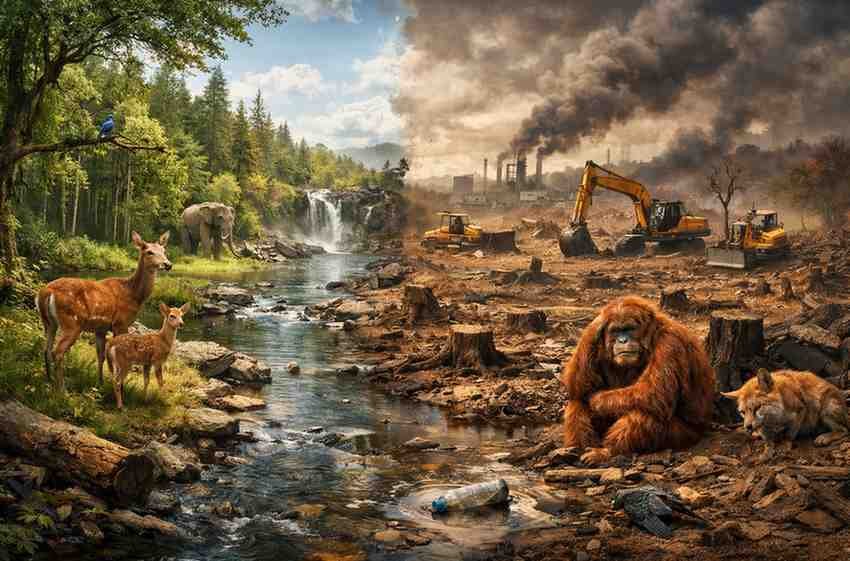
Habitat Destruction: Causes, Effects, and Environmental Consequences
Habitat destruction occurs when natural environments are altered or removed to the point that they can no longer support the plants and animals that depend on them. From dense forests to coral reefs, these habitats play a critical role in maintaining ecological stability. However, as human demands continue to grow, natural spaces are being cleared, polluted, or fragmented at an unprecedented pace. Activities such as deforestation, large-scale farming, urban expansion, and industrial development are major contributors to habitat destruction. While these actions often aim to improve living standards, they unintentionally trigger the loss of biodiversity by eliminating food sources, shelter, and breeding grounds for countless species. Many organisms are unable to adapt quickly enough, leading to population decline and extinction. The damage does not stop with wildlife. When habitats disappear, ecosystems lose their balance, resulting in environmental imbalance that affects climate regulation, soil health, and water systems. These disruptions ultimately impact human life as well. This article explores what habitat destruction is, why it happens, and how its environmental consequences threaten both nature and the future of our planet. What Is Habitat Destruction? Habitat destruction refers to the process in which natural living environments are damaged or eliminated, making them unsuitable for the species that rely on them for survival. When a habitat is destroyed, plants and animals lose access to essential resources such as food, shelter, and breeding areas. Over time, this leads to ecosystem degradation, where natural systems lose their structure, function, and ability to sustain life. While some habitat destruction can occur naturally through events like wildfires, floods, or volcanic eruptions, these processes usually allow ecosystems to recover over time. The most severe and long-lasting damage, however, is caused by human activities. Land clearing for agriculture, urban development, mining, and industrial projects often removes habitats faster than nature can regenerate, leaving permanent ecological scars. Examples of habitat destruction can be found across the planet. Forests are cleared for timber and farmland, wetlands are drained for construction and flood control, and oceans are damaged by pollution, overfishing, and coral reef destruction. Each of these actions contributes to ecosystem degradation, disrupting ecological balance and threatening countless species with displacement or extinction. Habitat Type Destruction Cause Forests Deforestation Wetlands Drainage Grasslands Urban expansion Coastal Pollution Major Causes of Habitat Destruction Infrastructure Development Infrastructure development is a major driver of habitat destruction as natural landscapes are cleared to make way for roads, dams, cities, and industrial facilities. Large construction projects often require extensive land modification, removing vegetation and altering landforms that many species depend on for survival. One of the most damaging outcomes of infrastructure development is habitat fragmentation. When roads and urban areas divide natural spaces into smaller, isolated patches, wildlife movement is restricted. Animals struggle to find food, mates, and safe migration routes, which weakens populations over time. As infrastructure expands, wildlife displacement becomes unavoidable. Species are forced into smaller areas or pushed into unfamiliar environments where survival is more difficult. This disruption not only threatens animal populations but also reduces ecosystem stability, increasing the long-term environmental impact of habitat destruction. Industrial Development Industrial development significantly contributes to habitat destruction by transforming natural land into mining sites, factories, and energy facilities. Mining operations strip away vegetation and topsoil, leaving behind degraded landscapes that struggle to recover. Manufacturing zones and industrial complexes often replace forests, wetlands, and grasslands, causing permanent land-use change. Pollution is another major consequence of industrial development. Factories release harmful chemicals into the air, soil, and water, contaminating surrounding habitats and making them unsafe for wildlife. Over time, these activities reduce ecosystem health, disrupt food chains, and accelerate biodiversity loss. Industry Type Environmental Impact Mining Land degradation Manufacturing Air & water pollution Energy plants Habitat loss Effects of Habitat Destruction on Ecosystems Loss of Biodiversity Loss of biodiversity is one of the most immediate and severe effects of habitat destruction. When natural environments disappear, many species are unable to adapt or relocate, leading to population declines and, in extreme cases, extinction. Plants and animals with specialized habitat needs are especially vulnerable, as even small environmental changes can threaten their survival. Beyond species extinction, habitat destruction also reduces genetic diversity within populations. Smaller, isolated groups are more prone to disease, inbreeding, and environmental stress, which weakens their ability to adapt to future changes. Over time, this genetic erosion makes ecosystems less resilient. The loss of biodiversity can also trigger food chain collapse. When key species disappear, predator-prey relationships are disrupted, affecting multiple levels of the ecosystem. These imbalances can spread rapidly, altering ecosystem functions and further accelerating environmental degradation. Ecosystem Degradation Ecosystem degradation refers to the gradual decline in the health and functionality of natural systems due to human activities and environmental pressures. When ecosystems are degraded, they lose their ability to support life, regulate natural processes, and recover from disturbances. This degradation has far-reaching consequences that affect biodiversity, climate stability, and human well-being. One of the most serious impacts of ecosystem degradation is reduced resilience. Healthy ecosystems can adapt to changes such as climate fluctuations, floods, or droughts. However, when forests are cleared, wetlands drained, or coral reefs damaged, these systems become fragile. Even minor disturbances can cause long-term damage, making recovery slow or sometimes impossible. Another critical outcome is the loss of natural balance. Ecosystems rely on complex relationships between plants, animals, microorganisms, and their physical environment. When this balance is disrupted—through pollution, overexploitation of resources, or habitat destruction—food chains collapse, species populations become unstable, and essential ecological processes such as nutrient cycling are interrupted. Ecosystem degradation also accelerates the spread of invasive species. Disturbed environments provide ideal conditions for non-native species to thrive, often outcompeting native plants and animals for resources. These invasive species further weaken ecosystems by altering habitats, reducing biodiversity, and increasing the risk of extinction for indigenous species. In the long run, ecosystem degradation not only threatens natural environments but also undermines the services ecosystems provide to humans, including clean air, fertile soil, and water regulation. Protecting and restoring degraded ecosystems