
In the heart of the densely populated state of West Bengal, a remarkable pocket of biodiversity thrives. Ramnabagan Wildlife Sanctuary, though relatively modest in size compared to some of India’s more famous national parks, is a crucial sanctuary that proves conservation can succeed even amidst rapid modernization. This unique destination offers more than just a glimpse of nature; it provides a profound juxtaposition where human development and untouched wilderness exist in delicate, yet vibrant, harmony. Visiting Ramnabagan Wildlife Sanctuary is not merely a sightseeing trip; it is an immersion into an environment where conservation meets accessible adventure.
The importance of wildlife conservation cannot be overstated in our modern era. As urban landscapes expand, the natural habitats that sustain countless species are shrinking. Sanctuaries like Ramnabagan play a pivotal role, serving as genetic reservoirs and critical ecosystems that filter our air, manage water resources, and provide essential psychological relief for urban dwellers. Conservation is not just about protecting individual animals; it is about preserving the complex web of life that sustains the planet. Every tree, insect, and mammal protected within these boundaries contributes to a global effort to maintain ecological balance.
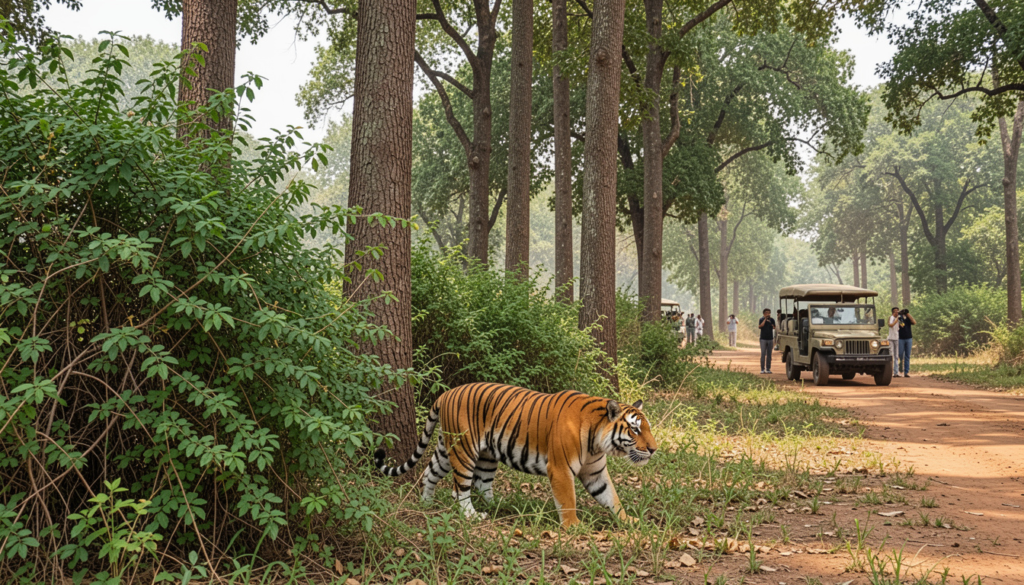
Ramnabagan Wildlife Sanctuary is distinguished by its seamless blend of adventure and wildlife experiences. It is a place where you can begin your day tracking rare mammals on a thrilling jungle safari and end it by peacefully observing vibrant bird species from a quiet watchtower. The sanctuary caters to diverse interests, offering rugged hiking trails for those seeking physical challenge and quiet, scenic zones perfect for nature photography or a serene family picnic. This integration of active exploration and static observation makes it an ideal destination for seasoned wildlife enthusiasts and curious first-time visitors alike. Whether you are navigating a dense forest trail or simply listening to the symphony of jungle sounds, Ramnabagan Wildlife Sanctuary delivers an unforgettable, high-energy experience rooted deeply in the natural world.
History and Background
The origins of Ramnabagan Wildlife Sanctuary are deeply entwined with the history of the surrounding region. It did not begin as a grand conservation project, but rather as an area of significant ecological value that required protection as the footprint of human activity expanded. While specific, large-scale royal hunting traditions (common in Rajasthan or Madhya Pradesh) aren’t the primary driver here, the necessity for a protected zone became evident to safeguard local flora and fauna from the encroaching agricultural and urban pressures of West Bengal.
Establishment and Timeline
- Pre-Status Era: For decades, the area was recognized by locals and forestry officials as a biodiverse hotspot, though it lacked formal protection. It served as a natural buffer and a source of traditional resources (like medicinal plants) for nearby communities.
- Formal Recognition (The 1980s): The critical turning point came in the early 1980s. Recognizing the rapid degradation of habitats across the state, the West Bengal Forest Department proposed formal sanctuary status. Ramnabagan Wildlife Sanctuary was officially established in 1981, marking a new era of proactive management and conservation.
- Evolution (1990s – 2010s): Following its establishment, the focus shifted from mere demarcation to active ecosystem restoration. This period saw significant investment in anti-poaching units, habitat improvement (such as creation of artificial water bodies), and the introduction of sustainable tourism infrastructure. The sanctuary evolved from a strictly closed reserve into an accessible educational and recreational asset.
- Modern Era: Today, Ramnabagan Wildlife Sanctuary is recognized as a model for “urban-proximate” conservation, demonstrating how a small but well-managed sanctuary can support significant biodiversity while providing immense value to the human population in surrounding areas.
Conservation Milestones
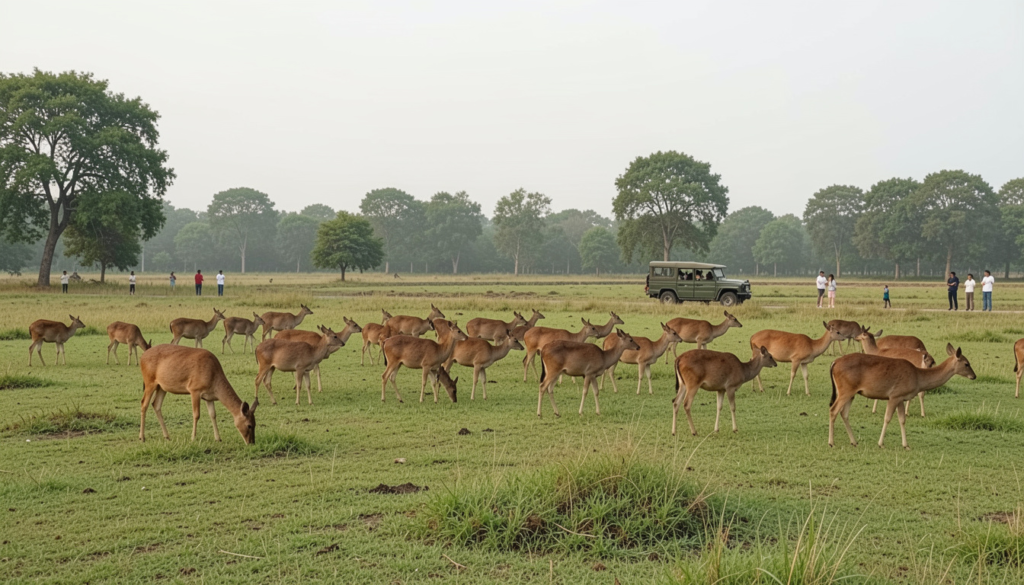
A key conservation milestone was the structured reintroduction and stabilization of the spotted deer (Chital) population. By carefully managing their habitat and ensuring a year-round water supply, the sanctuary saw a healthy increase in Chital numbers, which in turn helped balance the local ecosystem.
Another critical milestone was the implementation of a comprehensive ‘Eco-Development Committee’ (EDC) model. This program actively involved local villagers in conservation efforts, providing them with alternative livelihoods tied to responsible tourism. This drastically reduced conflicts over forest resources and turned the community into the sanctuary’s primary protectors. These efforts have also led to significant successes in stabilizing the populations of several native bird species, previously threatened by habitat loss.
The evolutionary journey of Ramnabagan Wildlife Sanctuary illustrates that conservation is a dynamic process. It requires clear timelines, measurable milestones, and, most importantly, the integration of human communities into the conservation equation.
Location and Accessibility
Understanding the logistical landscape is essential for planning a successful trip. Ramnabagan Wildlife Sanctuary is situated in the Bardhaman (or Burdwan) district of West Bengal, India. Geographically, it is positioned in the transitional zone between the fertile Gangetic plain and the rugged Chota Nagpur Plateau, giving it a unique ecological character. Its proximity to major urban centers in West Bengal makes it one of the most accessible wildlife destinations in the region, ideal for weekend getaways or structured educational tours.
Nearest Airports & Train Stations
- Nearest Airport: The primary gateway for air travelers is Netaji Subhash Chandra Bose International Airport (CCU) in Kolkata, located approximately 110 kilometers away. From the airport, visitors can easily hire private taxis or utilize pre-booked car rental services for a comfortable 2.5 to 3-hour drive to the sanctuary.
- Nearest Train Station: This is the most popular mode of transport. Bardhaman Junction (BWN) is a major railway hub and is exceptionally well-connected to Kolkata (Howrah and Sealdah stations) and other major cities across India. Hundreds of trains pass through this junction daily. Once you arrive at Bardhaman Junction, the sanctuary is just a short 5–10 kilometer ride away.
Road Routes & Parking
For those driving or taking a bus, the National Highway 19 (part of the Golden Quadrilateral) is the main artery connecting Kolkata to Bardhaman. The road is generally excellent, making the drive smooth and scenic.
- From Kolkata: Follow NH19 North. The route takes you through key towns like Dankuni and Shaktigarh (famous for its sweets). Once in Bardhaman city, follow the clearly marked local signs to “Ramnabagan.”
- Local Road: The sanctuary entrance is well-connected to the main city center by well-maintained local roads.
- Parking: The sanctuary provides dedicated parking facilities near the main gate. The parking area is spacious and secure, accommodating private cars, tour buses, and two-wheelers. During peak tourist season (weekends), it is advisable to arrive early to secure a convenient spot.
Local Transport Options
Navigating from Bardhaman city center or the train station to Ramnabagan Wildlife Sanctuary is highly convenient and affordable.
- Auto-Rickshaws (Totos): These are ubiquitous in Bardhaman. You can easily hire an auto-rickshaw (either shared or private) from the train station or any major intersection. Totos, the electric three-wheelers, are also a popular, eco-friendly option for the short distance.
- Cycle-Rickshaws: For a slower, traditional experience, cycle-rickshaws are readily available for shorter distances and provide a relaxed view of the city as you approach the green outskirts.
- App-Based Cabs/Local Taxis: While not as prevalent as in Kolkata, app-based cab services are sometimes operational. Traditional local taxis can also be hired for the day if you plan to visit multiple attractions around Bardhaman.
Accessibility is a major factor in the sanctuary’s appeal. Its strategic location and multiple transportation links ensure that a wildlife adventure is never out of reach.
Flora and Fauna of Ramnabagan Wildlife Sanctuary
The true heart of Ramnabagan Wildlife Sanctuary is its complex and vibrant ecosystem. For such a relatively small area, the density and variety of life it supports are astonishing. The sanctuary’s diverse habitats—ranging from dense deciduous forests to open grasslands and wetlands—create a unique tapestry that caters to a wide spectrum of species. A detailed exploration of the wildlife here reveals a thriving community that conservationists are working tirelessly to protect.
Mammals: Tigers, Deer, Wild Boar
While Ramnabagan Wildlife Sanctuary is not primarily a ‘tiger reserve’ in the traditional sense, its historical connection to the broader regional leopard/cat populations is significant. Today, the mammalian population is dominated by dynamic, thriving species that define the jungle experience.
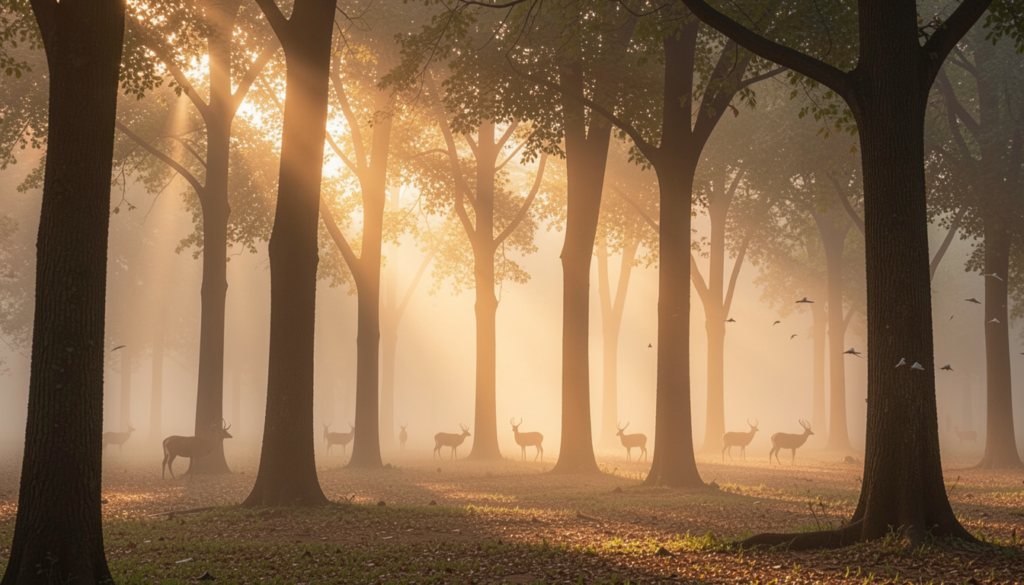
- Spotted Deer (Chital): The signature mammal of Ramnabagan. These graceful, dappled deer are the most frequently sighted animals and are central to the sanctuary’s ecosystem. Seeing a herd grazing peacefully in the dappled sunlight is a quintessential Ramnabagan moment.
- Barking Deer (Muntjac): A more elusive resident, the barking deer is named for its distinctive, dog-like alarm call. These small, reddish-brown deer prefer dense cover and are best spotted by patient observers on foot or from watchtowers.
- Wild Boar: A robust and active presence in the sanctuary. Wild boars thrive in the undergrowth and are often seen near water sources. They play a key ecological role by rooting up the soil, which helps with seed germination.
- Rhesus Macaque and Common Langur: No Indian jungle experience is complete without these charismatic primates. They are found throughout the sanctuary, often near the entrance and water bodies, providing endless entertainment (and requiring careful handling of food!).
- Other Mammals: The sanctuary also supports populations of smaller carnivores like the Golden Jackal, Jungle Cat, and Civets, though these are largely nocturnal and difficult to spot.
Birds: Peacocks, Kingfishers
For ornithologists and casual birdwatchers, Ramnabagan Wildlife Sanctuary is an absolute paradise. The combination of forest and wetlands attracts a stunning variety of resident and migratory birds.
- Indian Peafowl: The magnificent peacock, India’s national bird, is a resident here. Their haunting calls resonate through the jungle, and sightings are common, especially during the breeding season (pre-monsoon).
- Kingfishers: The sanctuary’s water bodies are the hunting grounds for several kingfisher species. Look for the dazzling, iridescent blue flash of the Common Kingfisher or the slightly larger White-throated Kingfisher perched patiently by the water.
- Asian Openbill Stork: A spectacular sight, particularly near the wetlands. These large storks, with their uniquely shaped bills (adapted for eating snails), often gather in colonies.
- Egrets and Herons: Various species of egrets (Great Egret, Little Egret) and herons (Pond Heron, Night Heron) are common around the marshy areas and lakes, standing motionlessly as they hunt.
- Raptors: Keep an eye on the sky for the resident Shikra and the occasional Crested Serpent Eagle soaring effortlessly above the canopy. The hoot of the Spotted Owlet is a familiar sound at dusk.
- Forest Dwellers: The dense trees are home to vibrant smaller birds like the Black-hooded Oriole, Plum-headed Parakeet, Common Iora, and several species of woodpeckers.
Flora: Native Trees, Medicinal Plants
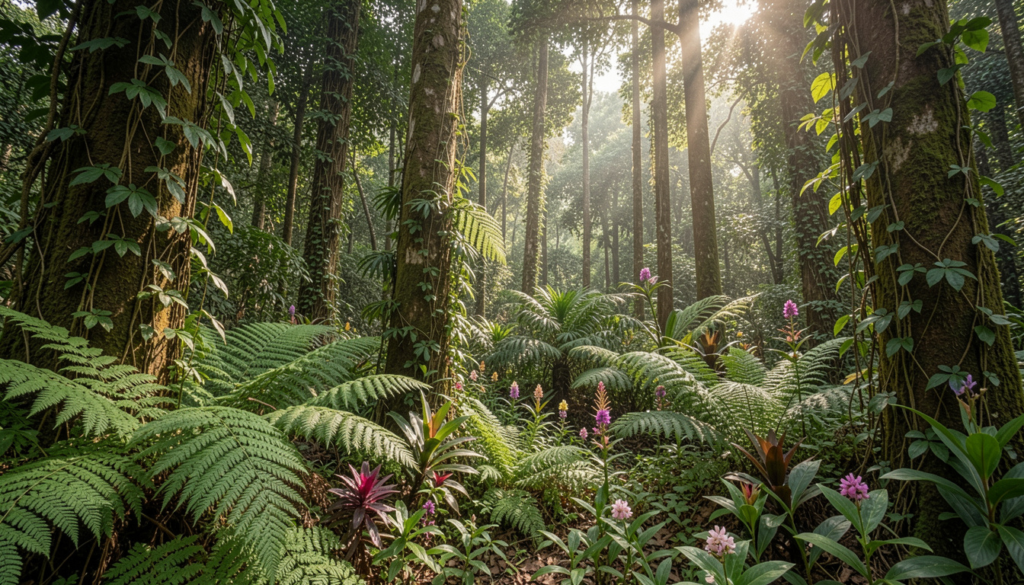
The sanctuary’s plant life is the foundation upon which its entire ecosystem is built. The dominant vegetation type is North Indian Tropical Moist Deciduous Forest, giving it a lush, green character for most of the year.
- Dominant Tree Species: The canopy is composed of sturdy, valuable native trees. Sal (Shorea robusta) is a key species, known for its tall, straight trunk and durable timber. Other significant trees include Teak (Tectona grandis), Simul (Bombax ceiba – Silk Cotton Tree), and Arjun (Terminalia arjuna).
- Flowering and Fruiting Trees: These are vital for the bird and monkey populations. The Palash (Butea monosperma – Flame of the Forest) paints the sanctuary in brilliant shades of orange and red during the spring. The Mahua (Madhuca longifolia) tree, famous for its sweet, intoxicating flowers, attracts deer and wild boar. Banyan (Ficus benghalensis) and Peepal (Ficus religiosa) trees provide shade, fruit, and religious significance.
- Medicinal Plants: The sanctuary is also a living pharmacopeia, harboring many plants used in traditional Ayurveda and local medicine. These include species like Sarpagandha (Rauvolfia serpentina) and Gritkumari (Aloe vera).
Conservation Status & Efforts
Today, the primary conservation challenge is managing the boundaries and human pressure, given its proximity to Bardhaman.
Continued investment in habitat improvement, strict patrolling, and sustained community engagement are the pillars of the sanctuary’s ongoing strategy.
Every visitor to Ramnabagan Wildlife Sanctuary contributes, through entry fees and responsible behavior, to this essential preservation work.
Top Attractions and Experiences
Gemini said
A visit to Ramnabagan Wildlife Sanctuary is structured around several core experiences designed to connect you directly with the natural world.
These attractions cater to different levels of activity and interest, ensuring every visitor can create their own unique adventure.
From the structured thrill of a safari to the meditative peace of birdwatching, the sanctuary offers a comprehensive menu of interactions with the wild.
Animal Safari: Types, Timings, Tips
The classic way to explore any Indian jungle is the safari. While Ramnabagan doesn’t offer the massive open-jeep safaris common in large reserves (due to its size and terrain), it has a charming, structured alternative.
- The Jungle Safari Experience: For many visitors, a highlight is the jungle safari in Ramnabagan Wildlife Sanctuary. Structured on a narrow-gauge railway or using authorized vehicles, this safari takes you through the heart of the core conservation zone. It’s an excellent way to cover significant ground and maximize chances of seeing larger mammals like the spotted deer and wild boar, who often gather in the open glades visible from the safari route. The contained nature of the safari makes it exciting and safe, particularly for families.
- Timings: Safaris generally operate in two shifts: early morning (approx. 6:30 AM – 9:30 AM) and late afternoon (approx. 3:00 PM – 5:30 PM). These are the times when animals are most active, moving to water bodies or open areas to graze.
- Booking: It’s highly recommended to inquire and book your safari slot at the sanctuary entrance gate immediately upon arrival, especially during weekends.
- Tips: Dress in earthy tones (greens, browns, greys) to blend in. Stay inside the designated vehicle at all times. Keep noise to an absolute minimum; animals are very sensitive to sound.
Bird Watching: Best Spots, Seasons
For many enthusiasts, the birdwatching experience is the ultimate reason to visit. The sanctuary’s landscape, punctuated by water bodies, makes it exceptionally rewarding.
- The areas around the main lake and the designated ‘wetland zones’ are the absolute prime spots for water birds (storks, egrets, kingfishers).
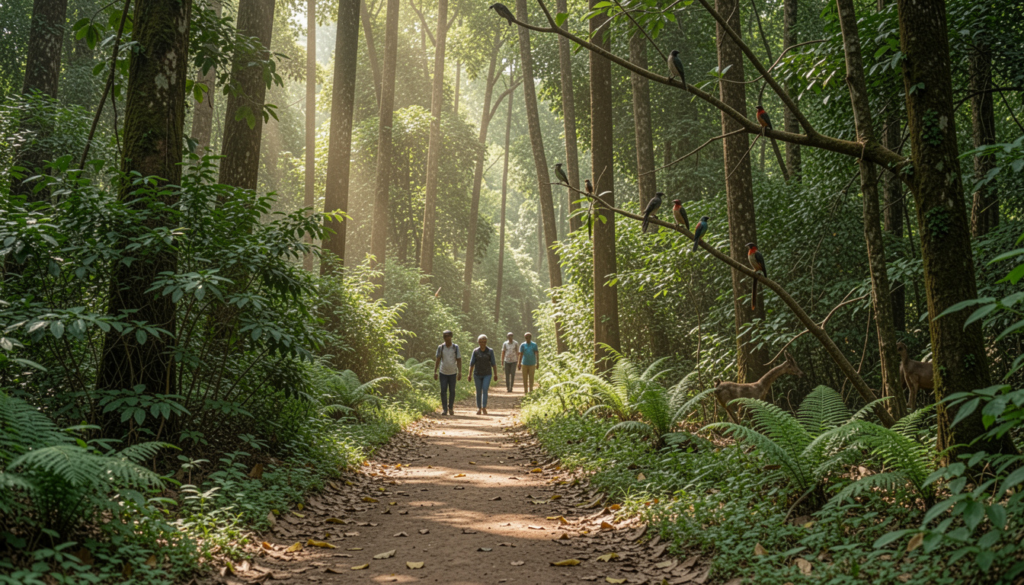
- The nature trails through the denser Sal forest are perfect for spotting woodland species (orioles, parakeets, woodpeckers).
- The Palash trees in full bloom (spring) are magnets for sunbirds and barbets.
- Watchtowers The sanctuary features strategically located watchtowers (Gomukh and Ramnabagan watchtowers). These are brilliant for getting an elevated perspective and observing birds that prefer the upper canopy or the far sides of the lake, without disturbing them.
- Seasons Winter (Nov-Feb): The peak season. This is when migratory birds from Siberia and Central Asia arrive, adding species like the Northern Pintail and Gadwall to the mix. The weather is also pleasant.
- Monsoon (Jun-Sep): The sanctuary is exceptionally lush. This is the breeding season for many resident birds, particularly the Indian Peafowl, and their calls are ubiquitous.
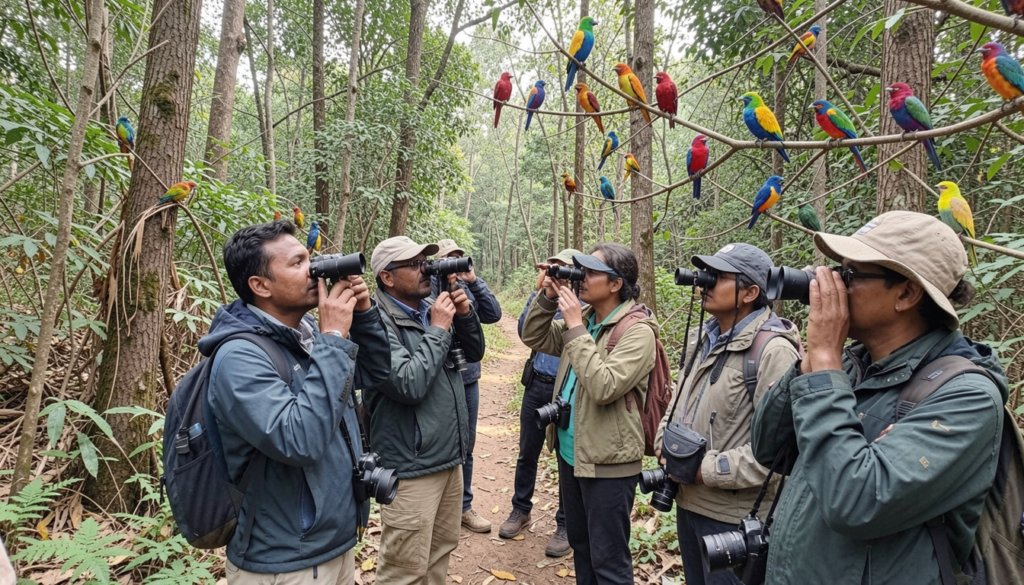
- Tips A pair of binoculars is non-negotiable. Bring a camera with a good zoom lens.
- A bird guide specific to the Indian subcontinent is helpful. Early morning (sunrise) is universally the best time.
Nature Trails & Trekking: Levels, Routes
For those who want to experience the jungle at a slower pace and ‘feel the ground,’ nature trails are ideal.
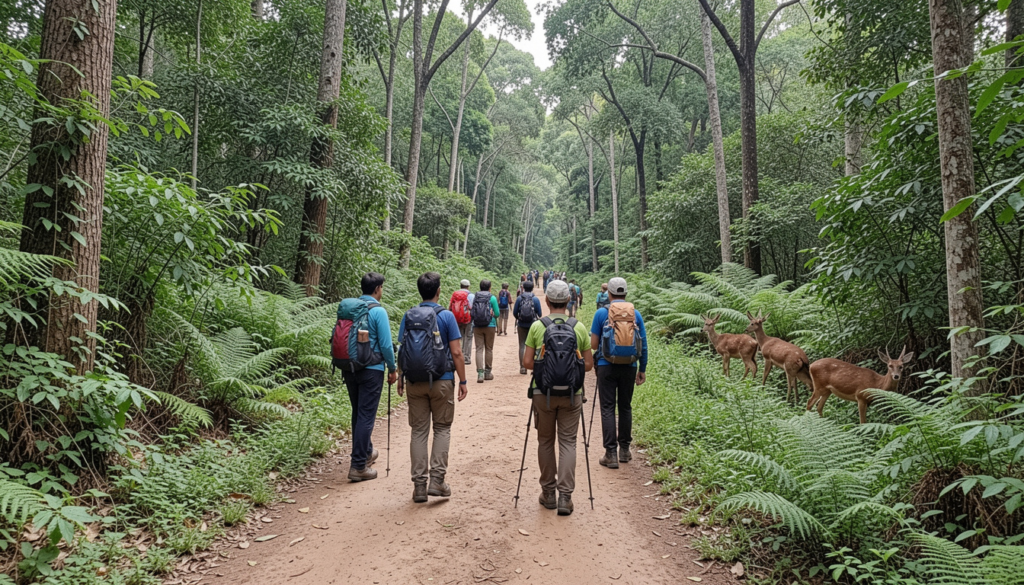
- Levels: Ramnabagan offers structured nature trails that are generally easy to moderate. They are well-marked and relatively flat, making them accessible to anyone with a basic level of fitness.
- Routes:
- The Deer Trail: A popular, easy route that circles a known grazing area. It provides excellent, predictable opportunities to see spotted deer up close.
- The Canopy Walk: A short but immersive trail that takes you through a dense patch of forest, offering a chance to appreciate the sheer variety of tree species and spot arboreal mammals like langurs and monkeys.
- Tips: Wear sturdy, closed-toe walking shoes. Stick strictly to the designated path to avoid disturbing sensitive habitats and for your own safety.
Photography Hotspots: Scenic Locations
With its blend of forest, water, and wildlife, Ramnabagan is a canvas of photogenic opportunities.
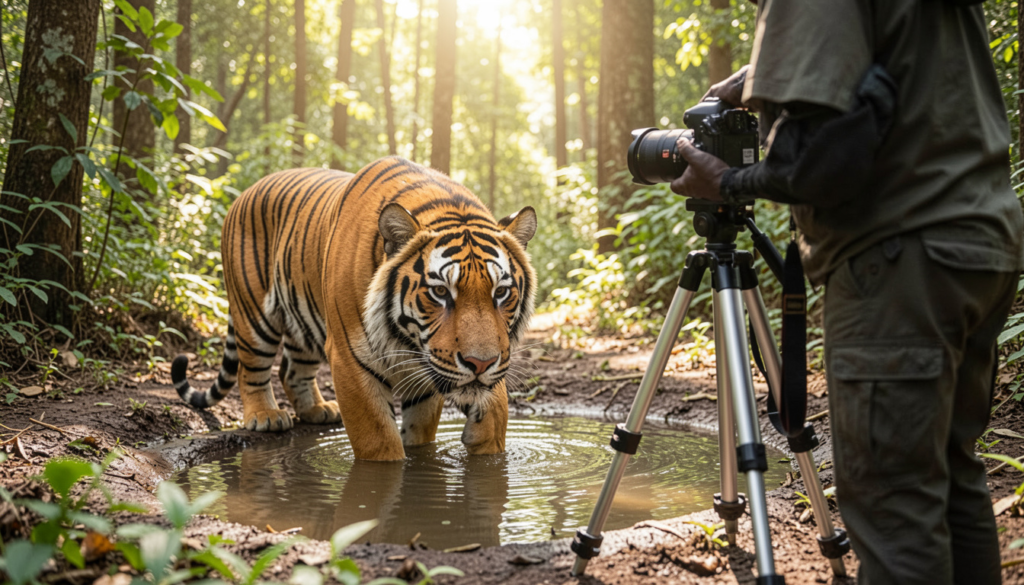
- The Main Lake: Capture stunning reflections of the Sal trees in the still water. It’s perfect at sunrise or sunset. Frame shots of storks or egrets against the water.
- Palash Grove (Spring): The brilliant orange and red flowers create spectacular foregrounds or backgrounds. They are also excellent for capturing close-up (macro) shots of the sunbirds they attract.
- Dappled Light on the Trails: The way sunlight filters through the dense tree canopy creates dramatic patterns on the forest floor, ideal for artistic, moody shots.
Adventure Activities at Ramnabagan Wildlife Sanctuary
The unique identity of Ramnabagan Wildlife Sanctuary is forged by its successful fusion of conservation and accessible adventure. While it provides a safe haven for wildlife, it also recognizes the human need for active engagement and physical challenge.
For the modern adventurer, the sanctuary offers multiple ways to step away from the everyday and immerse oneself in the thrilling dynamics of a healthy ecosystem.
This adventure component is not about adrenaline-fueled, high-risk activities, but rather about engaged exploration and active participation.
Jungle Safari Experience
The jungle safari experience at Ramnabagan Wildlife Sanctuary remains its most structured and accessible adventure activity. It’s a dynamic, moving exploration that combines the suspense of tracking wildlife with the thrill of navigating the jungle terrain.
Unlike passive observation, the safari places you in the environment. This creates a powerful connection as you scan the undergrowth and follow the expert guidance of the driver and guide.
Camping & Picnic Zones
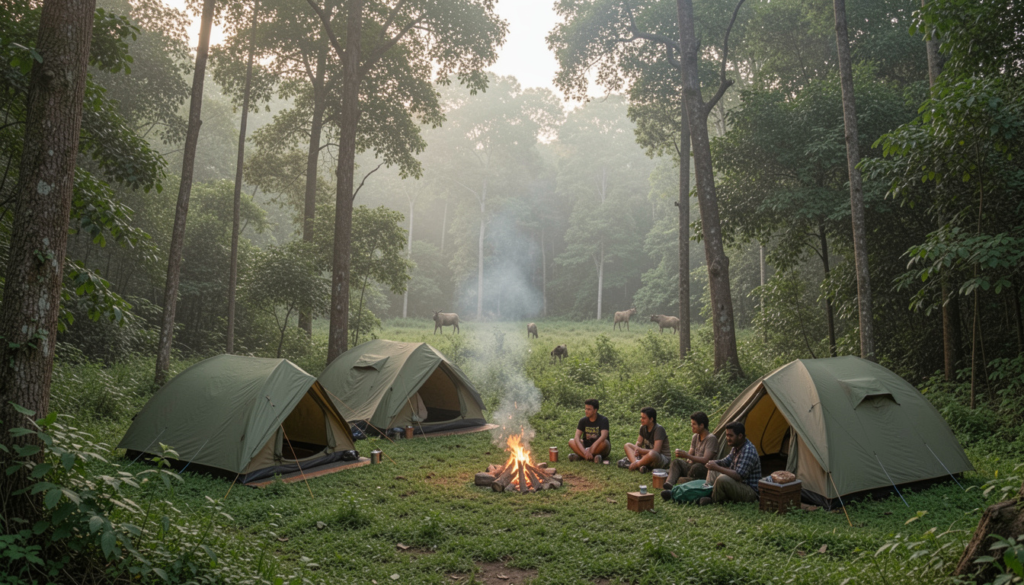
- Camping (By Permit): The ultimate adventure for nature lovers is overnight camping. While not universally open, Ramnabagan Wildlife Sanctuary has specific, designated camping zones that are made available during the peak season (usually winter), strictly by advance permit from the West Bengal Forest Department. Camping here offers a profound connection to the jungle, allowing you to experience the nocturnal symphony and wake up to the first calls of the forest. These permits are limited and prioritize eco-sensitivity.
- Picnic Zones (Winter/Spring): For a more relaxed outdoor experience, the sanctuary provides designated picnic zones near the periphery. These zones offer a safe and enjoyable way for families and friends to enjoy a meal surrounded by nature. Picnic spots are incredibly popular, especially during the pleasant winter months (December and January), and they fill up quickly on weekends. Visitors must adhere to strict ‘leave no trace’ principles.
Hiking & Nature Walks
- Guided Hiking: For those seeking a deeper, more active engagement, Ramnabagan Wildlife Sanctuary offers structured, guided hiking routes. These are more than just casual walks; they are curated journeys led by experienced forest guides who know the jungle’s pulse. Hiking allows you to explore the terrain at your own pace, focusing on smaller wildlife, intricate plant species, and the subtle signs of animal activity (tracks, scat, calls) that you might miss on a safari. Guides share fascinating insights into the sanctuary’s ecology and folklore.
- Self-Guided Nature Walks (Designated Trails): The sanctuary also features well-marked, safe trails for self-guided nature walks. These trails (like the Deer Trail) are designed to provide a taste of active exploration while ensuring visitor safety. They are perfect for solo travelers or small groups who prefer to discover the sanctuary on their own terms.
Adventure Safety Tips
- Stay Within Boundaries: The most critical safety rule is to strictly stay within the designated trails, safari routes, camping zones, and picnic areas. Venturing into the core wilderness is prohibited and dangerous.
- Never Feed Animals: Attempting to feed wild animals is harmful to their health, creates a dangerous dependency, and can provoke aggressive behavior, particularly from monkeys and langurs.
- Respect the Guide: During guided hikes and safaris, the guide’s instructions are paramount. They understand the wildlife behavior and the terrain; their expertise is your primary safety net.
- Nocturnal Activity: Be aware that the jungle is a different place at night. Camping and authorized night walks require extreme caution and strict adherence to specific safety protocols provided by the forest department.
Adventure at Ramnabagan Wildlife Sanctuary is about engagement, respect, and controlled exploration. It’s an opportunity to challenge your perceptions and connect with nature in its most dynamic form.
Tips for Visitors
A successful trip to Ramnabagan Wildlife Sanctuary requires a bit of planning and an understanding of the jungle’s rhythms. The environment here, while accessible, is a wild ecosystem with its own set of rules. This section provides the essential information and practical advice you need to ensure your visit is enjoyable, safe, and respectful of the sanctuary’s inhabitants.
Best Time to Visit and Weather Considerations
- Peak Season (Winter): October to February. This is generally considered the best time to visit Ramnabagan Wildlife Sanctuary. The weather is cool, dry, and pleasant, with temperatures ranging from 10°C to 25°C. This is also the prime season for birdwatching, as the sanctuary hosts many migratory species.
- Mid-Season (Spring): March to May. Spring is beautiful, especially with the Palash and Simul trees in full, dramatic bloom. However, temperatures begin to rise significantly, often touching 35°C by May. Animals are more likely to gather near water bodies, offering focused sighting opportunities.
- Monsoon (Jun-Sep): The Sanctuary is Typically Closed. The heavy rains make the forest tracks muddy and difficult, and this is the primary breeding season for much of the wildlife.
- Weather Considerations: Even in winter, the mornings can be surprisingly chilly. Always check the weather forecast for Bardhaman before your trip, particularly for rain, which can impact safari operations and trail accessibility.
Entry Fees, Permits, and Timings
- Sanctuary Entry Fees (Estimated):
- Indian Adults: ₹100–₹150 (approx.)
- Indian Children: ₹50–₹75 (approx.)
- International Tourists: ₹500–₹750 (approx.)
- Activity Permits:
- Safari Fee: Varies by vehicle type (usually ₹2000–₹3000 per vehicle; shared options may exist).
- Guided Hiking: (Inquire at the gate) approx. ₹500 per guide for a 2-hour session.
- Camping Permits: Must be obtained in advance from the Bardhaman Divisional Forest Office and incur additional fees.
- Timings:
- Morning Shift: 6:30 AM – 10:00 AM (Last entry usually 9:00 AM)
- Evening Shift: 3:00 PM – 5:30 PM (Last entry usually 4:30 PM)
- Note: The sanctuary strictly enforces these timings.
- Permit Info: For routine visits and safaris, permits are generally obtained directly at the sanctuary main gate on a first-come, first-served basis. Online booking (if available via the West Bengal Forest Department portal) is highly recommended, especially for weekends.
Subsections: Packing Essentials
- Clothing: Dress in earthy tones (greens, browns, greys) to blend in. Avoid bright colors and heavy patterns. Wear layers that you can easily remove as the day warms up. A light jacket is useful for early morning safaris.
- Footwear: Sturdy, closed-toe walking shoes or boots are essential for the nature trails and hikes.
- Sun Protection: A hat, sunglasses, and good quality sunscreen are non-negotiable, even in winter.
- Insect Repellent: Recommended, especially during spring, as mosquitoes and other insects can be prevalent.
- Binoculars and Camera: Crucial for appreciating wildlife from a distance and capturing memories. Bring spare batteries and memory cards.
- Hydration: Bring a reusable water bottle. While filtered water may be available at the main gate, it’s best to be self-sufficient.
Wildlife Etiquette
- Maintain Silence: The single most important rule. Keep conversations low; a loud noise can instantly spook animals.
- Keep Distance: Never attempt to get close to wild animals. Use your zoom lens or binoculars. Respect their space.
- No Feeding: We cannot emphasize this enough. Feeding animals (especially monkeys and langurs) is illegal and harmful.
- Stay Inside Vehicles/Trails: Stick to designated paths and never get out of the safari vehicle except at approved stop points.
- No Litting: “Leave only footprints, take only pictures.” Use the provided bins at the entrance and carry your trash back with you.
Safety Guidelines
- Stay Alert: Always be aware of your surroundings on the nature trails.
- Listen to Guides: The guides are experts; their instructions are for your safety.
- Carry a Basic First-Aid Kit: Include band-aids, antiseptic wipes, and any personal medication.
- Check Post-Hike/Walk: Do a quick check for ticks and other insects after your walk.
Nearby Attractions
A visit to Ramnabagan Wildlife Sanctuary can easily be expanded into a multi-day trip by exploring the rich historical and cultural tapestry of the surrounding Bardhaman district. The sanctuary provides the perfect green anchor for an itinerary that includes stunning temples, interesting museums, and vibrant local life.
Historical Sites
- Curzon Gate (Star of India Gate): This grand archway, built in 1903 in honor of Lord Curzon’s visit, is a prominent landmark in Bardhaman city center. It’s a classic example of Indo-Saracenic architecture.
- 108 Shiva Temples (Nawab Hat): Located just a few kilometers from the sanctuary, this is a spectacular architectural marvel. This complex features 108 identical Shiva temples arranged in two concentric circles, built in 1788 by Maharani Bishen Kumari.
- Tomb of Sher Afghan: The final resting place of Sher Afghan Khan, a powerful noble and the first husband of Mehr-un-Nissa (later Empress Nur Jahan). It’s a site of significant Mughal history and intrigue.
- Bardhaman Rajbari (Royal Palace): The historical residence of the mighty Burdwan Raj family. While not fully open to the public, parts of the expansive palace complex and its beautiful gardens can be viewed.
- Sarvamangala Temple: Dedicated to Goddess Sarvamangala (a form of Durga), this temple is a spiritual hub and hosts major festivals, particularly during Durga Puja.
Local Markets
- Bardhaman Market (Bara Bazaar): The bustling central market is the perfect place to experience local life, shop for spices, textiles, and traditional crafts.
- Ahar Temple Market: This lively market, near the famous 108 Shiva Temples, is great for finding traditional temple offerings and unique local handicrafts.
- Burdwan Sweets: No trip is complete without trying Bardhaman’s signature sweets, Miidana and Sitabhog. The Bara Bazaar area has several iconic sweet shops.
Other Wildlife Spots
- Golap Bag: While not a “wildlife spot” in the sense of a sanctuary, this beautiful royal garden (built in the 19th century) is a peaceful haven known for its stunning rose collection and ancient trees, offering a different kind of botanical experience.
- Krishnasaywar Park & Lake: This is a popular spot for boating and birdwatching. While smaller than Ramnabagan’s lake, it attracts many resident water birds and offers a relaxed outdoor environment.
Why Visit Ramnabagan Wildlife Sanctuary?
The appeal of Ramnabagan Wildlife Sanctuary lies not in grand scale or iconic predators, but in its ability to offer an intimate, high-quality interaction with nature that is both accessible and meaningful. It’s a place where you can quickly disconnect from the relentless pace of urban life and find profound peace amidst a thriving wilderness.
Emphasize its Unique Combination of Wildlife and Adventure
- Accessible Adventure: Unlike many large, remote reserves that require significant time and travel, Ramnabagan is easily reachable for a day trip or a short weekend stay. This makes it a unique destination that offers a thrilling jungle experience (complete with safaris and nature trails) without the logistical hurdles. It’s “micro-adventure” at its finest.
- Concentrated Wildlife: For its size, the sanctuary supports a remarkably dense and visible population of mammals (especially spotted deer and wild boar) and a spectacular array of resident and migratory birds. Sightings are frequent and quality, providing immense satisfaction for photography and wildlife enthusiasts.
- Perfect for Everyone: Whether you are a solo traveler seeking solitude, a couple looking for a romantic nature escape, or a family wanting to introduce children to the wonders of wildlife, Ramnabagan has something to offer. Its mix of structured activities (safaris) and quiet observation (watchtowers) makes it adaptable to any interest.
Benefits for Nature Lovers, Photographers, Families
- Nature Lovers: Finds solace in the ancient trees and the natural symphony.
- Photographers: Discover endless opportunities for stunning landscapes, action-packed bird shots, and intimate wildlife portraits in the beautiful dappled light.
- Families: Provides a safe, educational, and fun way to connect children with the natural world and teach them the importance of conservation.
- Fictional Testimonials/Impressions:
- “I was amazed by how quickly I felt immersed in the wild. The nature trails were incredible—we saw a whole herd of deer within minutes. Perfect escape from Kolkata!” – Vikram, IT Professional.
- “As a bird photographer, I was blown away by the variety of kingfishers and storks. The watchtower offered the perfect vantage point. Definitely coming back!” – Anita, Wildlife Enthusiast.
- “The jungle safari was the highlight of our family trip. The kids were thrilled to see the wild boar so close. It was a wonderful, educational experience for them.” – The Sharma Family.
FAQs about Ramnabagan Wildlife Sanctuary
How long is a typical visit?
- A typical, meaningful visit requires about 4 to 6 hours. This is generally sufficient to experience the core attractions: a jungle safari, some structured nature walks on the main trails, and quality time at the primary watchtowers for birdwatching.
- However, true nature enthusiasts, dedicated photographers, and serious birdwatchers often find that a full day (from early morning to late afternoon) allows for a more relaxed and thorough exploration, maximizing the chances of diverse sightings and capturing beautiful moments in varying light conditions.
Are there guided tours?
- Yes, guided tours are available and highly recommended. Experienced forest guides can be hired directly at the sanctuary entrance. Their intimate knowledge of the terrain, plant life, and animal behavior is invaluable, enriching your experience far beyond what you can discover on your own.
- Safari guides are also standard and mandatory on all structured safaris, ensuring a smooth and educational journey.
- For specialised interests (e.g., intensive birding), it is advisable to inquire about guides with specific expertise.
Best season for wildlife sightings?
- The Winter Season (November to February) is universally considered the best. This is when the weather is most pleasant, encouraging animals to spend more time in open areas for grazing and near water bodies.
- This period also offers the added bonus of hosting many migratory bird species, significantly increasing the variety and spectacle of bird sightings.
- Spring (March-April) can also be productive as animals gather near the receding water sources, but the rising heat makes sightings less predictable.
Accommodation options nearby?
- Bardhaman City: The most popular choice, as it is just 5-10 kilometers away and offers a wide range of options:
- Budget Hotels: Numerous clean, basic options near the train station and Curzon Gate.
- Mid-Range Hotels: Several well-regarded options offering modern amenities.
- Luxury/Boutique: A few higher-end hotels available.
- WBTDC (West Bengal Tourism Development Corporation) Tourist Lodge: Located in Bardhaman, it is a reliable, budget-friendly state-run accommodation.
- Sanctuary Rest House (By Permit): There is a small rest house within the sanctuary periphery, but availability is extremely limited and requires prior booking and permits from the Divisional Forest Officer.
Conclusion
Ramnabagan Wildlife Sanctuary is more than just a destination; it is a vital reminder of our shared responsibility to protect the natural world. It proves that conservation is not only possible but can also be incredibly accessible and engaging. This unique sanctuary successfully balances its core mission of habitat preservation with a vibrant program of active exploration and education.
Visiting Ramnabagan Wildlife Sanctuary offers a comprehensive experience that seamlessly blends the thrill of adventure with the profound beauty of wildlife. It’s a place where you can actively participate in the jungle’s rhythm, from the tracking suspense of a safari to the physical challenge of a forest hike. Every visitor contributes to this essential preservation effort, supporting the infrastructure and community engagement that keep the sanctuary thriving.
The experiences waiting for you here—the sudden flash of a kingfisher, the peaceful grazing of spotted deer, the intricate detail of a native tree, and the thrill of navigating the wild—are memories that will resonate long after you leave.
The combination of easy accessibility, rich biodiversity, and engaging activities makes Ramnabagan Wildlife Sanctuary an unparalleled choice for any traveler seeking a genuine and impactful connection with nature. Plan your visit today and experience this wonderful combination of adventure and wildlife for yourself.
Quick Facts / Bullet Points Section
- Location: Bardhaman (Burdwan) District, West Bengal, India.
- Area: Approximately 1.5 sq km.
- Dominant Forest Type: North Indian Tropical Moist Deciduous Forest.
- Key Mammal Species: Spotted Deer (Chital), Barking Deer (Muntjac), Wild Boar, Rhesus Macaque, Common Langur.
- Key Bird Species: Indian Peafowl, Asian Openbill Stork, various Kingfishers, Shikra, Crested Serpent Eagle.
- Adventure Activities: Jungle Safari, Guided Hiking, Nature Walks, Camping & Picnicking (in designated zones).
- Top Experiences: Wildlife Safari, Birdwatching from watchtowers, Nature Trail Trekking.
- Best Time to Visit: November to February (for pleasant weather and migratory birds).
- Nearest Major City: Kolkata (approx. 110 km away).
- Nearest Train Station: Bardhaman Junction (BWN).