
Ushakothi Wildlife Sanctuary, also known as Badrama Wildlife Sanctuary, is a major forest and wildlife conservation area in western Odisha. Covered with dense sal forests and natural landscapes, Ushakothi Wildlife Sanctuary supports rich biodiversity and untouched wilderness.
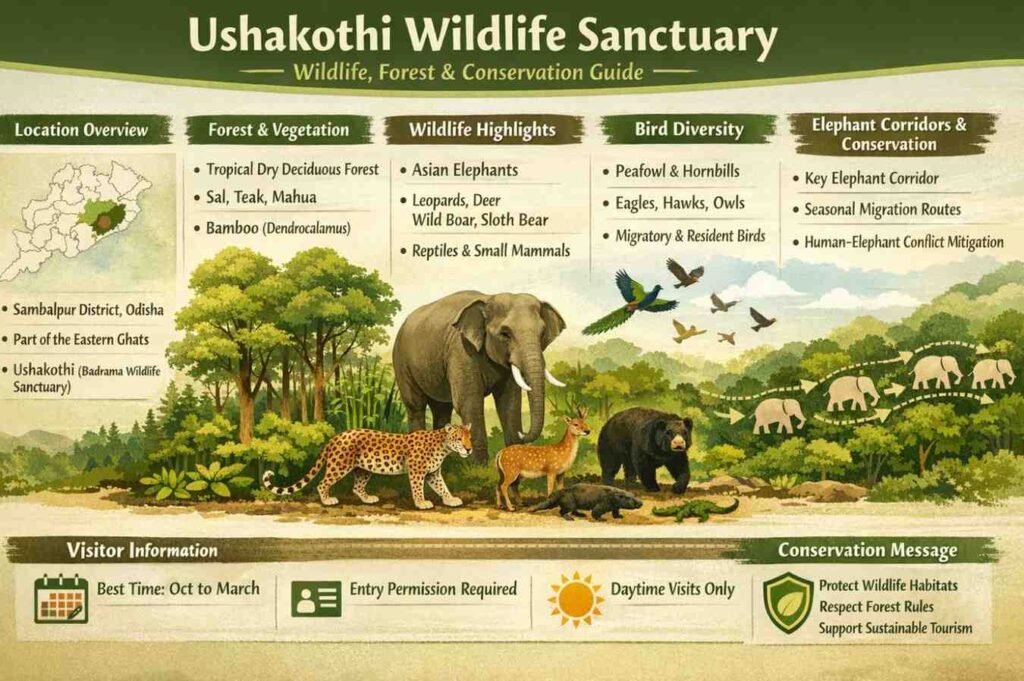
Located in Sambalpur district, Ushakothi Wildlife Sanctuary is part of the Eastern Ghats ecosystem. The sanctuary is famous for its large population of Asian elephants, along with leopards, deer, wild boars, and diverse bird species.
This guide to Ushakothi Wildlife Sanctuary will help readers understand its wildlife, forest environment, and natural importance. It also provides useful insights for travelers, nature lovers, and wildlife enthusiasts exploring Odisha’s forest regions.
Overview of Ushakothi Wildlife Sanctuary
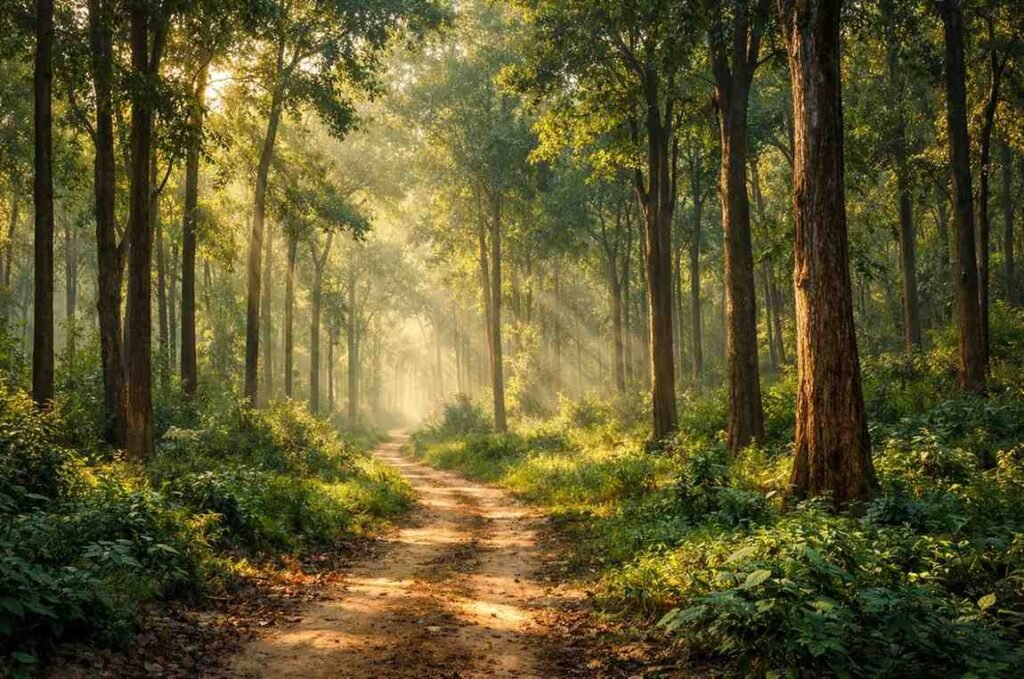
Ushakothi Wildlife Sanctuary is one of the prominent protected forest regions in western Odisha, known for its rich wildlife and dense natural vegetation. As an important wildlife sanctuary in Odisha, it covers a vast forest landscape that supports a wide variety of animals, birds, and plant species. The sanctuary is managed by the Odisha Forest Department and plays a key role in conserving forest ecosystems in the region.
Also known as Badrama Wildlife Sanctuary, Ushakothi Wildlife Sanctuary holds a strategic position in Odisha’s network of protected areas. It acts as a crucial wildlife corridor, especially for elephants, helping maintain safe movement between forest ranges. This connectivity strengthens conservation efforts and supports long-term wildlife survival across different forest zones of the state.
The sanctuary is highly significant for biodiversity conservation in Odisha. Ushakothi Wildlife Sanctuary protects diverse flora, ranging from sal-dominated forests to mixed deciduous vegetation, while providing habitat for mammals, reptiles, and hundreds of bird species. Its ecological importance makes it not only a vital wildlife sanctuary in Odisha but also a key contributor to environmental stability and forest conservation in the region.
| Detail | Information |
|---|---|
| Location | Sambalpur District, western Odisha, India |
| Established | 1962 |
| Total Area | Approximately 304 square kilometers |
| Alternate Name | Badrama Wildlife Sanctuary |
| Forest Type | Tropical dry deciduous forest |
| Governing Authority | Odisha Forest Department |
| Ecological Zone | Eastern Ghats region |
| Major Rivers & Streams | Seasonal streams and forest water channels |
| Primary Wildlife | Asian elephants, leopards, spotted deer, sambar, wild boar |
| Bird Diversity | Peafowl, hornbills, parrots, migratory and resident birds |
| Conservation Status | Protected wildlife sanctuary |
| Tourism Type | Eco-tourism, wildlife observation, nature exploration |
Location and Geographic Features of Ushakothi Wildlife Sanctuary
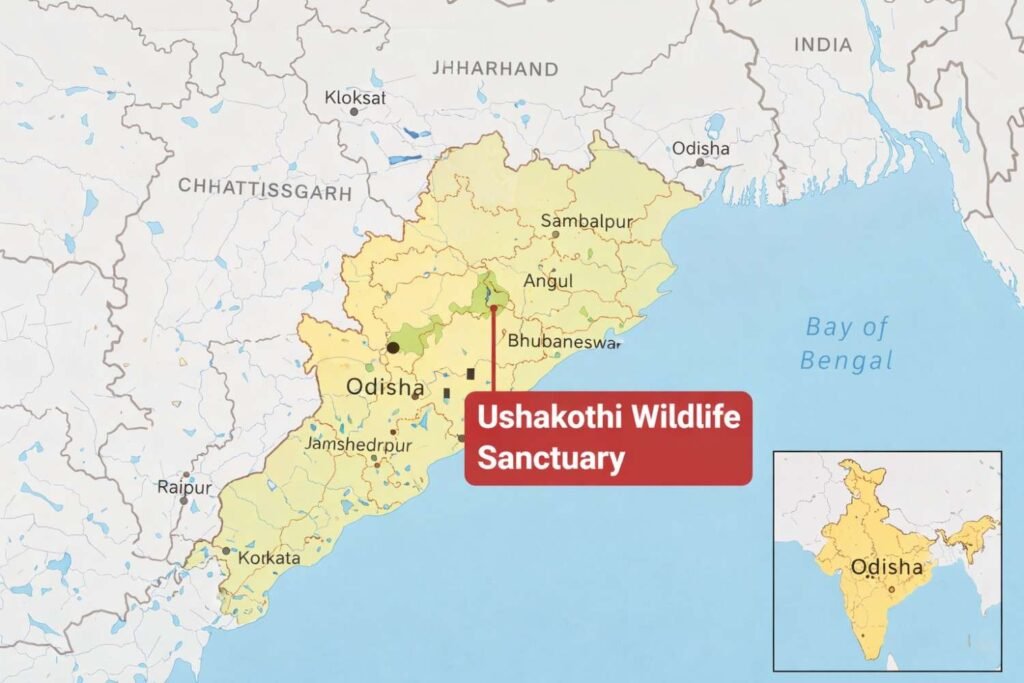
The Ushakothi Wildlife Sanctuary location is in the Sambalpur district of western Odisha, making it one of the most important forest regions in the state. The sanctuary lies close to Sambalpur town and is well connected to nearby areas such as Rairakhol, Jharsuguda, and Bargarh. Its strategic location within the Eastern Ghats landscape allows Ushakothi Wildlife Sanctuary to function as a vital ecological zone supporting forest and wildlife conservation.
| Feature | Details |
|---|---|
| Location | Sambalpur District, western Odisha, India |
| Nearest Towns | Sambalpur, Rairakhol, Jharsuguda, Bargarh |
| Geographic Region | Eastern Ghats |
| Terrain Type | Hills, plains, valleys, and undulating forest land |
| Elevation | Moderate elevation with gentle hill ranges |
| Rivers & Water Bodies | Seasonal rivers, forest streams, natural water channels |
| Soil Typ | Forest soil suitable for dry deciduous vegetation |
| Forest Landscape | Dense sal forests mixed with open woodland areas |
| Climate Type | Tropical climate |
| Summer Temperature | Hot, can exceed 40°C |
| Winter Temperature | Mild and pleasant, around 10°C–25°C |
| Monsoon Season | June to September |
Forest Type and Vegetation of Ushakothi Wildlife Sanctuary
The Ushakothi Wildlife Sanctuary forest is primarily classified as a tropical dry deciduous forest, which is one of the most widespread and ecologically important forest types in central and eastern India. This forest type sheds leaves during the dry season to conserve water, creating a unique seasonal landscape within the sanctuary. The dry deciduous forest supports a rich variety of plant life and provides ideal conditions for grazing and shelter for many wildlife species.
Sal (Shorea robusta) is the dominant tree species in the Ushakothi Wildlife Sanctuary forest and forms dense forest patches across large areas. Along with sal, trees such as teak (Tectona grandis), bamboo, mahua, tendu, and various acacia species are commonly found. Bamboo thickets play a crucial role in providing food and cover for herbivores, especially elephants, while mahua trees are important for both wildlife and local forest-dependent communities.
The vegetation of Ushakothi Wildlife Sanctuary also includes shrubs, grasses, climbers, and medicinal plants that contribute to the overall biodiversity of the dry deciduous forest ecosystem. Seasonal grasses flourish after the monsoon, supporting herbivores like deer and wild boar. This diverse vegetation structure helps maintain ecological balance, supports food chains, and strengthens the sanctuary’s role as a key wildlife habitat in Odisha.
| Vegetation Type | Common Species |
|---|---|
| Trees | Sal, Teak, Mahua |
| Bamboo | Dendrocalamus species |
| Grassland | Natural grazing patches |
Wildlife Species of Ushakothi Wildlife Sanctuary
The Ushakothi wildlife is diverse and reflects the healthy forest ecosystem of western Odisha. The sanctuary provides a safe and natural habitat for a wide range of mammals, reptiles, birds, and smaller forest species. Due to its dense vegetation, water availability, and protected status, animals in Ushakothi Wildlife Sanctuary thrive with minimal human disturbance.
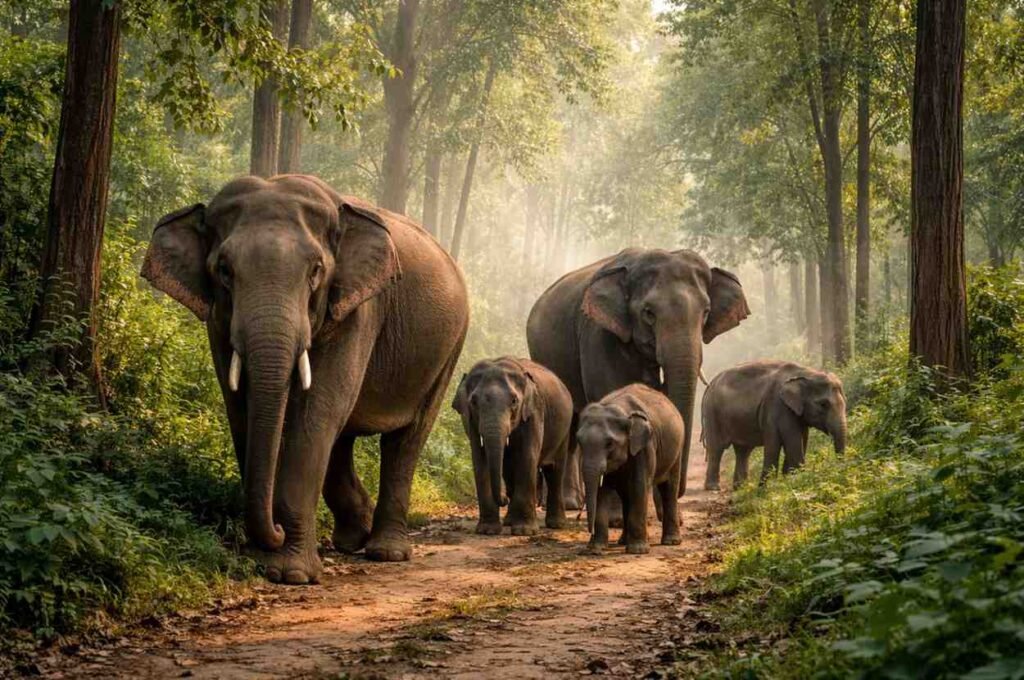
One of the most notable attractions of Ushakothi Wildlife Sanctuary is its large population of Asian elephants, which frequently move through the forest corridors in herds. Other major mammals found here include leopards, sambar deer, spotted deer, barking deer, wild boars, sloth bears, and jackals. These animals depend on the sanctuary’s dry deciduous forests and grasslands for food, shelter, and breeding.
Apart from mammals, Ushakothi wildlife also includes a rich variety of bird species such as peafowl, parrots, hornbills, eagles, and migratory birds during certain seasons. Reptiles like pythons, cobras, monitor lizards, and various snake species are also commonly found. This wide range of animals in Ushakothi Wildlife Sanctuary highlights its importance as a key biodiversity hotspot in Odisha’s forest landscape.
Bird Species of Ushakothi Wildlife Sanctuary
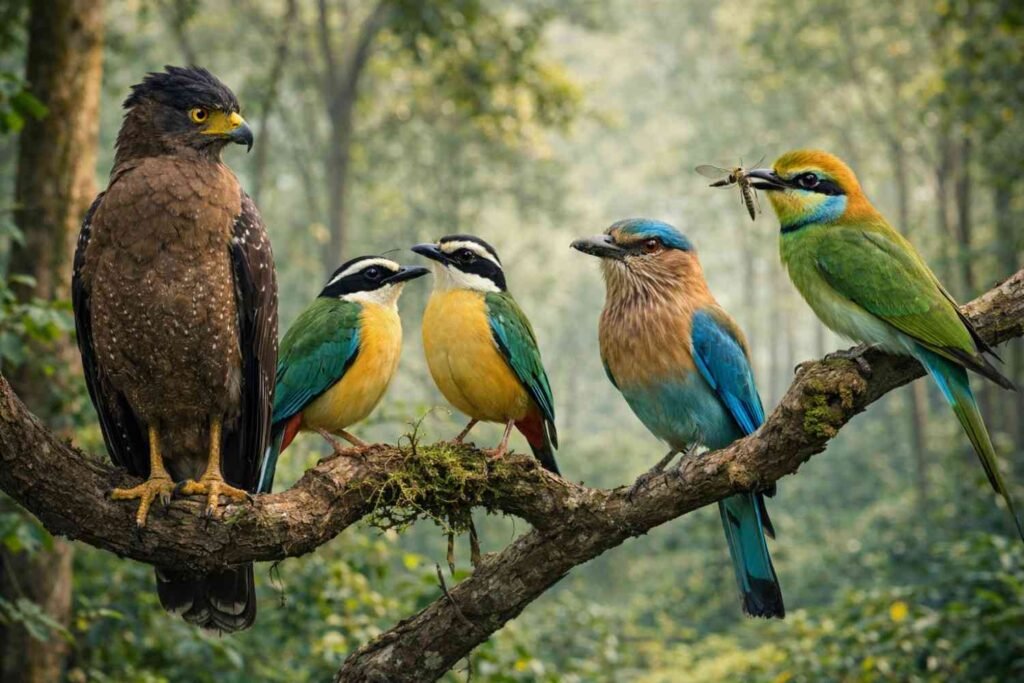
The birds of Ushakothi Wildlife Sanctuary add vibrant life and sound to its forest ecosystem, making the sanctuary an important destination for bird lovers. The mix of dense dry deciduous forest, open grasslands, and water bodies creates ideal habitats for a wide variety of resident and seasonal bird species.
Several resident birds are commonly seen throughout the year, including peafowl, jungle fowl, parrots, mynas, drongos, bulbuls, and kingfishers. These birds play a vital role in seed dispersal and insect control, helping maintain the ecological balance of the forest. Forest-dwelling birds thrive in the thick sal and bamboo vegetation of Ushakothi.
During certain seasons, the birds of Ushakothi Wildlife Sanctuary also include migratory species that arrive near water bodies and open forest patches. Raptors such as eagles, hawks, kites, and owls are frequently spotted soaring above the canopy or perched on tall trees, while hornbills and woodpeckers represent the rich forest bird diversity.
Because of this wide range of species, Ushakothi Wildlife Sanctuary holds great importance for birdwatching and nature photography. Early mornings and winter months are especially rewarding for spotting rare forest birds, making the sanctuary a peaceful yet exciting destination for bird enthusiasts.
Elephant Habitat and Wildlife Corridors in Ushakothi Wildlife Sanctuary
The elephant habitat of Ushakothi Wildlife Sanctuary is one of the most significant features of this protected forest area. Ushakothi supports a healthy and stable population of Asian elephants that depend on its dense sal forests, bamboo patches, and natural water sources. These habitats provide elephants with food, shade, and space to move freely, making the sanctuary a crucial stronghold for elephant conservation in western Odisha.
Elephants in Ushakothi Wildlife Sanctuary follow seasonal migration patterns, moving between forest ranges in search of water and fresh vegetation. During summer and dry months, herds often travel along traditional forest routes that connect Ushakothi with nearby protected areas. These routes form part of an important elephant corridor in Odisha, allowing safe movement without isolating elephant populations.
The presence of an elephant corridor in Odisha highlights the ecological importance of Ushakothi Wildlife Sanctuary beyond its boundaries. These corridors reduce stress on elephant herds and help maintain genetic diversity. However, seasonal movement sometimes leads to human–elephant conflict in nearby villages, mainly due to crop damage. Conservation efforts by forest authorities focus on habitat protection, awareness programs, and conflict mitigation to ensure peaceful coexistence between local communities and wildlife.
Entry Rules, Timings, and Visitor Guidelines
Visitors planning a trip should be aware of the Ushakothi Wildlife Sanctuary entry rules to ensure a safe and responsible experience. Entry into the sanctuary is regulated by the Odisha Forest Department, and visitors are generally required to obtain prior permission from forest authorities or the local range office. Entry without authorization is strictly prohibited to protect wildlife and forest ecosystems.
The sanctuary is usually open to visitors during daytime hours, from early morning to late afternoon. Visiting hours may vary depending on seasons, weather conditions, or wildlife movement, and entry is often restricted during night hours for safety reasons. It is advisable to visit Ushakothi Wildlife Sanctuary during daylight, preferably in the morning, when wildlife activity is higher.
For safety and conservation, visitors must follow strict guidelines while inside the sanctuary. Do not disturb animals, maintain silence, and always stay on permitted routes. Littering, smoking, alcohol consumption, and feeding wildlife are strictly prohibited. Following these Ushakothi Wildlife Sanctuary entry rules helps protect wildlife, ensures visitor safety, and supports long-term conservation efforts in this important forest area.
| Category | Details |
|---|---|
| Entry Permission | Prior permission required from Forest Department |
| Visiting Hours | Daytime only (morning to late afternoon) |
| Night Entry | Not allowed |
| Guided Entry | Recommended / may be required in some areas |
| Safety Rules | Maintain silence, follow forest staff instructions |
| Prohibited Activities | Littering, smoking, alcohol, feeding animals |
| Vehicle Movement | Restricted to permitted routes only |
| Best Visiting Time | Morning hours for better wildlife sightings |
Conclusion
Ushakothi Wildlife Sanctuary stands as a vital natural treasure in western Odisha, protecting rich biodiversity and a balanced forest ecosystem. With its dry deciduous forests, diverse wildlife, and significant elephant habitat, the sanctuary plays an essential role in regional wildlife conservation. It supports not only animals and birds but also maintains ecological stability and natural resources.
Beyond conservation, Ushakothi Wildlife Sanctuary offers great value for nature-based tourism. Its peaceful environment, scenic landscapes, and opportunities for wildlife observation attract nature lovers, researchers, and eco-tourists seeking an authentic forest experience. Unlike heavily commercialized parks, it provides a more serene and responsible way to connect with nature.
Preserving Ushakothi Wildlife Sanctuary is a shared responsibility. Visitors, local communities, and authorities must work together to protect its wildlife and forest ecosystem. By respecting rules and promoting sustainable tourism, we can ensure this important sanctuary continues to thrive for future generations.
Frequently Asked Questions
Q1: Where is Ushakothi Wildlife Sanctuary located?
Ushakothi Wildlife Sanctuary is located in the Sambalpur district of western Odisha. It lies within the Eastern Ghats region and is well connected to nearby towns such as Sambalpur, Rairakhol, and Jharsuguda.
Q2: What animals are found in Ushakothi Wildlife Sanctuary?
Ushakothi Wildlife Sanctuary is home to Asian elephants, leopards, sambar deer, spotted deer, barking deer, wild boars, sloth bears, jackals, reptiles, and a wide variety of bird species.
Q3: Is safari available in Ushakothi Wildlife Sanctuary?
Jeep safaris may be available with prior permission from forest authorities. Safari availability depends on season, forest conditions, and wildlife safety guidelines set by the Odisha Forest Department.
Q4: What is the best time to visit Ushakothi Wildlife Sanctuary?
The best time to visit Ushakothi Wildlife Sanctuary is from October to March, when the weather is pleasant and wildlife sightings are more frequent.
Q5: Why is Ushakothi Wildlife Sanctuary famous?
Ushakothi Wildlife Sanctuary is famous for its large elephant population, dense dry deciduous forests, and its role as an important elephant corridor in Odisha.
Q6: Are entry permissions required to visit Ushakothi Wildlife Sanctuary?
Yes, visitors must obtain prior permission from the forest department or local range office before entering Ushakothi Wildlife Sanctuary.
Q7: Is Ushakothi Wildlife Sanctuary suitable for birdwatching?
Yes, the sanctuary is an excellent destination for birdwatching, with resident and migratory birds, including raptors, forest birds, and water-associated species.
Q8: How does Ushakothi Wildlife Sanctuary contribute to wildlife conservation?
Ushakothi Wildlife Sanctuary supports wildlife conservation by protecting natural habitats, maintaining forest ecosystems, and enabling safe movement of elephants through wildlife corridors